Exchange. Connection. Gain.
It all started with pigs. And with an odor problem. In 1987, near Deutschlandsberg in Styria:
At a pig-fattening farm, the intense smell of ammonia posed a significant problem. A call for proposals was issued to find a solution—and Tihomir Lelas took on the challenge.
The scientist, originally from Croatia, was at that time the director of a research institute in Vienna. Through his work, he was already familiar with the unique properties of zeolite—a volcanic mineral long known for its filtering, adsorption, and absorption properties.
The experiment in Styria turned out to be a surprising success. The finely ground zeolite not only reduced the ammonia odor in the barn. Significant changes were also observed in the animals: the pigs’ health improved, cases of diarrhea decreased, and aggressive behavior also declined.
For Lelas, this marked the beginning of decades of research and development work.
From Grinding to Activation
As early as the 1970s, Lelas was already working intensively on optimizing grinding processes.
Conventional ball mills, however, had a decisive disadvantage: The mineral was in constant contact with metal during the grinding process. As a result, impurities and metal abrasion could find their way into the final product. Lelas therefore sought a fundamentally different approach.
The idea was as simple as it was logical: the mineral should not strike metal, but rather strike other minerals. Instead of conventional grinding media, he developed a process in which the particles are accelerated by air currents and collide with one another at high speeds. This results in a multitude of collisions between the mineral particles themselves. This approach forms the basis of tribomechanical activation.
Three Key Characteristics
The unique effect of tribomechanical activation is based on several factors.
1. High purity—no metal abrasion
Since the mineral particles primarily collide with one another during the activation process, contact with metallic grinding media is avoided. This allows for a particularly high level of purity in the final product.
2. Fracturing of the mineral structure
During collisions, the particles are fractured along their natural crystal structures. This can significantly increase the surface area available for adsorption and ion exchange. In activated zeolite, the internal surface area can be many times greater than the external particle surface area. It forms the critical reaction space for the mineral’s characteristic properties..
3. Alteration of the Particle Surface
The intense collisions alter the physical properties of the particle surfaces. Among other things, electrical charge states can be created or modified. This influences the behavior of the particles, such as their interaction with other surfaces. Thus, a tribomechanically activated mineral differs from a conventionally ground mineral not merely by its particle size. Rather, the decisive factors are the altered surface properties and the resulting higher reactivity.
Further Development: Air2Air Activation Technology
Tribomechanical activation served as the starting point. But technological development means taking existing processes a step further.
Based on this, Steinkraft GmbH has developed Air2Air Activation Technology—a modern airflow process for the controlled activation of mineral raw materials.
The principle is straightforward:
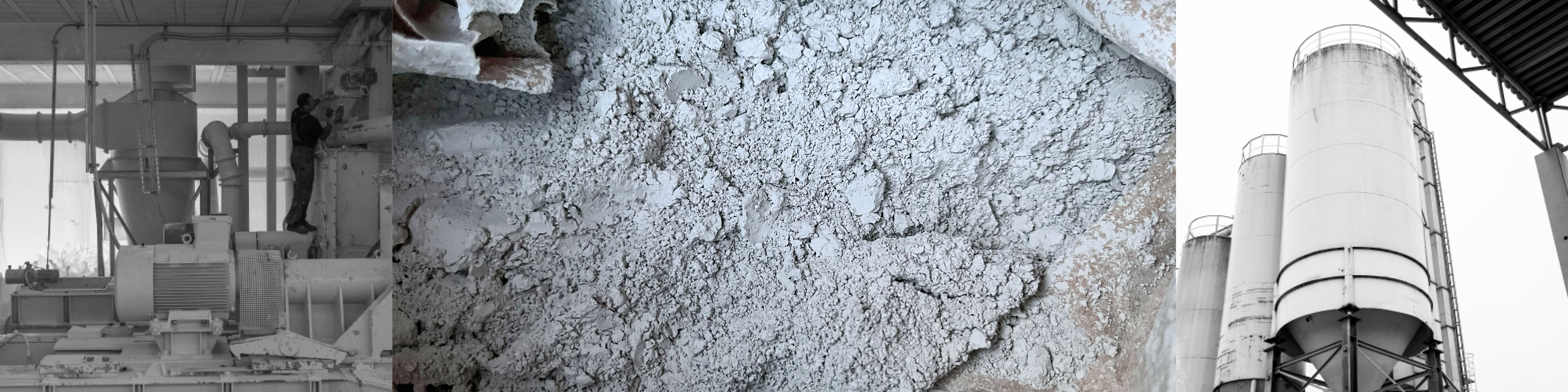
The raw materials are accelerated within a controlled airflow and caused to collide with one another. The particles collide with other particles—not with metallic grinding media. Air2Air means: air-to-air. The airflow plays a central role in this process. It transports, accelerates, and separates the particles, enabling controlled processing of the mineral feedstock.
The result is a finely ground mineral with defined physical properties and high purity.
Selected mineral raw materials are used in the manufacturing process. An important raw material is clinoptilolite zeolite from the Košice region in eastern Slovakia. The quality and purity of the raw material are monitored.
Transportation takes place under controlled conditions in sealed BigBags. This prevents the material from being unnecessarily exposed to moisture or foreign substances during transport and storage.
Another crucial factor is our in-house production. We don’t simply purchase pre-ground minerals—we activate and process the raw material ourselves. This allows us to control the entire critical process: from the selected raw material through processing to the desired fineness and specific product properties.
This is not a minor detail. It is an essential component of our quality strategy. From a pig barn in Styria in 1987 to today’s Air2Air Activation Technology, this represents a development spanning decades: from the observation of an unusual effect to the controlled technological activation of mineral raw materials.